Reputation and risk
Ipamorelin’s reputation has some awkward witnesses
The weight papers pull against the leaner-body story. The sleep stories have no controlled human outcome trial behind them. Safety is a separate inspection.
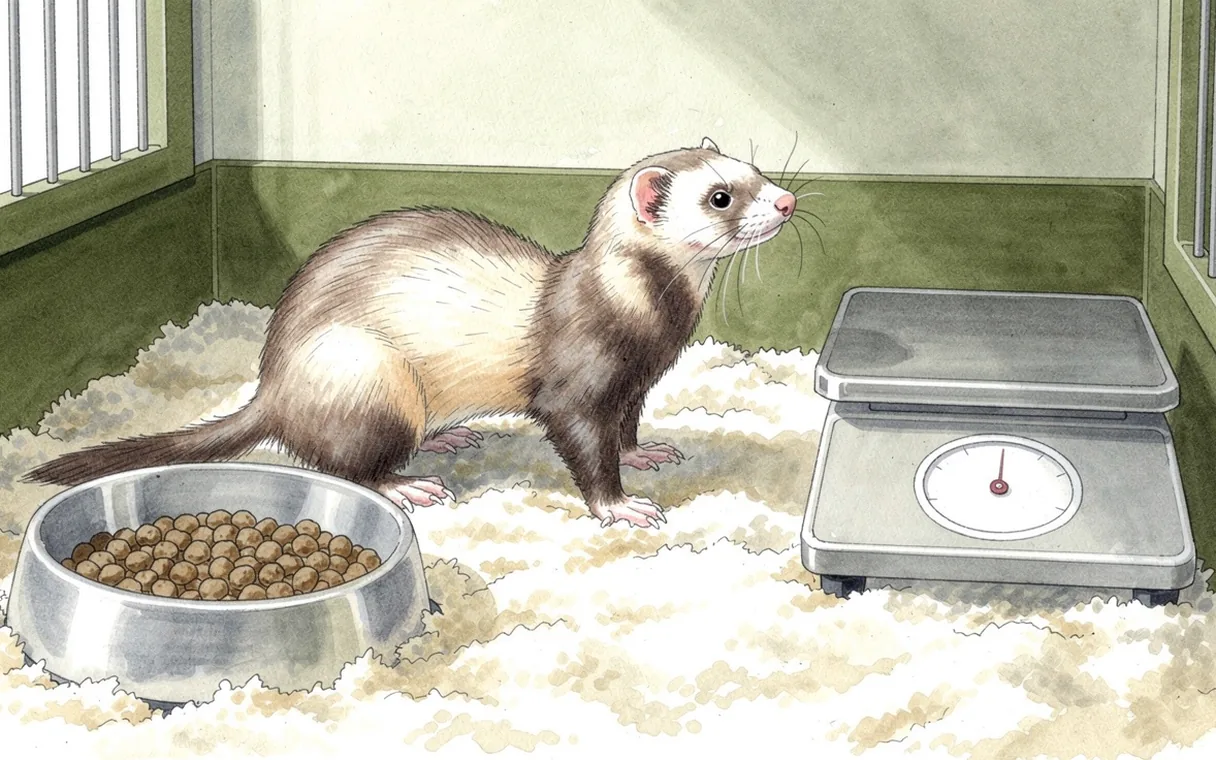
The ferret result was about keeping weight on
In the 2024 cisplatin experiment, Ipamorelin inhibited body-weight loss in ferrets by approximately 24% on the last day of the delayed phase (48–72 h). It had no anti-emetic effect in either the acute or delayed phase: vomiting was not prevented.
That is an animal result about a cancer-drug model. I can’t turn preserved weight in those ferrets into a human fat-loss benefit, and the lack of an effect on vomiting makes even the animal result more specific than “better recovery.”
The mice put on fat, even without normal GH
The mouse adiposity study found increased fat deposition in both GH-deficient and GH-intact mice after Ipamorelin. Part of the effect therefore did not require normal growth-hormone production.
I expected a tidier GH-to-weight story. These mice made that expectation untenable. They do not prove a human will gain fat, but they are particularly inconvenient evidence for an assured human fat-loss claim. No controlled human trial in the record establishes that Ipamorelin trims belly fat.
The sleep reports arrive with complaints
Community accounts describe deeper sleep, vivid dreams, less post-training soreness and a gradual leaner appearance. They also mention flushing, head rushes, hunger, tingling, puffiness, dizziness, fatigue and irritation at an injection site. Some describe a fading perceived response.
These are anecdotal accounts, not clinical evidence. They come without the controlled comparison needed to attribute the change to Ipamorelin, and diet, training and other compounds can complicate the favorable body-composition reports. There are no measured occurrence rates here.
The extra certainty irritates me. A warm face does not establish that a preparation has the right identity; a better night does not validate a general sleep treatment. Neither feeling can fill in the missing safety record.
Ipamorelin, hunger and the animal evidence
“Does Ipamorelin make you hungry?” is a fair question: hunger appears in the anecdotal accounts. Rat experiments with ghrelin and GH secretagogues also activated appetite centers and induced feeding, but those were class-level animal experiments with central administration.
That supports a reason to investigate appetite. It does not tell us how often Ipamorelin causes hunger in people, or how much weight an individual might gain. The animal experiment exhausts my confidence here; the receptor name supplies no personal prediction.
Blood sugar has more than one influence
GH excess can reduce insulin sensitivity, a mechanism relevant to concern about high blood sugar. In the other direction, Ipamorelin stimulated insulin release from rat pancreatic tissue without GH involvement. No human glycemic dataset in this record settles the net effect.
IGF-1, a downstream mediator of GH effects, also responded differently between experiments. It did not change in the short rat bone-growth study, while it rose in rats studied with methylprednisolone. To me, the contradiction is useful: the setup matters, and a hormone mechanism cannot promise a consistent metabolic outcome.
GH and IGF-1 signaling also raise a theoretical concern about growth of an existing or occult tumor. The concern is theoretical. Human Ipamorelin trials have not demonstrated a tumor event behind it.
A rat heart warning from a relative
The 28-day rat cardiovascular study found dose-dependent myocardial degeneration and necrosis with a related ghrelin-receptor agonist. It did not test Ipamorelin. I won’t attribute its damage to Ipamorelin, and I won’t pretend the shared receptor makes the warning irrelevant.
Long-term cardiovascular safety of Ipamorelin in people remains uncharacterized. GH excess is also associated with salt and water retention, which matters when swelling or fluid overload is already a concern. Community puffiness reports do not quantify that risk.
Is CJC-1295 Ipamorelin safe?
There is no controlled human safety trial of the pair as one product in this record. The short bowel-surgery trial of Ipamorelin alone cannot answer that combination question, or establish safety during prolonged use.
The 2026 review of peptide use in sport discusses safety concerns in uncontrolled use and the wider anti-doping setting. Ipamorelin is prohibited in sport at all times under WADA rules. A short blood half-life does not erase that status.
Research-grade material brings another unresolved question: peptide identity, purity and sterility are not assured by the name. The research-grade quality question deserves equal space beside the biological risks.