The mechanism under inspection
Ipamorelin mechanism of action: one measured pulse
The mechanism earns close attention. The temptation is to let a precise hormone result stand in for every hoped-for outcome.
The ghrelin receptor
Ipamorelin activates GHS-R1a, the receptor normally used by ghrelin. At the pituitary, the gland beneath the brain, that signal releases stored growth hormone. A secretagogue is simply something that prompts secretion; in this case, the first characterization found a potent GH response in cells and animals.
Ghrelin’s association with hunger puts appetite directly into the question. The same general signaling system reaches beyond the pituitary. The upgrade from “selective hormone release” to “only one effect anywhere in the body” earns my suspicion.
Ipamorelin’s effect on GH pulse frequency
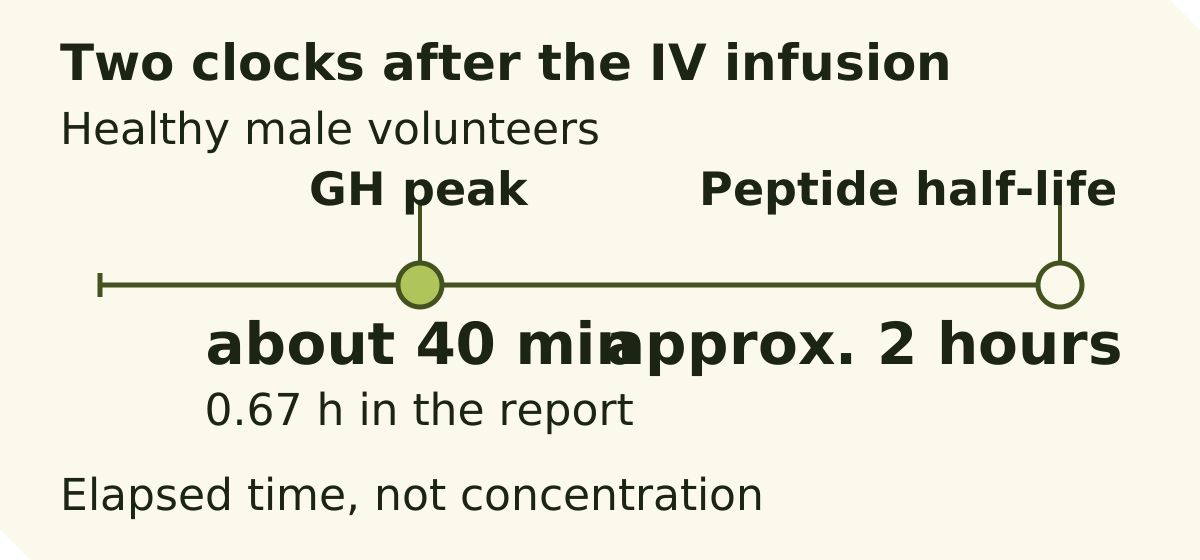
The human pharmacokinetic study gave healthy male volunteers intravenous infusions, with 8 men per dose level. Growth hormone rose as a single discrete pulse, peaking at about 0.67 h (40 min). Ipamorelin’s terminal half-life was approximately 2 hours.
Those are separate observations: the timing of the hormone response and the decline of the peptide in blood. Neither establishes how repeated use changes GH pulse frequency across a day or night. I won’t stretch one observed pulse into a claim that the body’s whole rhythm has been improved.
The figure gives those clocks separate space and marks elapsed time. Concentration measurements remain unplotted.
Hormone selectivity in animals
In the 1998 animal characterization, ACTH and cortisol did not rise above the level seen with GHRH even at doses more than 200-fold higher than the dose associated with half-maximal GH release. Prolactin was not meaningfully raised either. That is a more substantial result than merely seeing little change at one low dose.
This demanding comparison earns my admiration. Its scope is still acute hormone release in animals, rather than chronic safety in people. It does not rule out changes in appetite, insulin or body fat.
Ipamorelin vs sermorelin: different starting points
Ipamorelin uses the ghrelin-receptor pathway characterized in the founding study. Sermorelin is an analog of growth-hormone-releasing hormone, or GHRH, and works through the GHRH receptor. These are different signals arriving at the same gland.
The distinction explains the interest in pairing a GHRP with a GHRH analog. It doesn’t supply a clinical comparison showing which improves a person’s health. The receptor distinction seems valuable to me precisely within that boundary.
Ipamorelin vs tesamorelin: receptors and approval
Tesamorelin acts through the GHRH receptor. The current clinical distinction is plain: tesamorelin has an approved medical use, while Ipamorelin has never been approved. Ipamorelin’s published bowel-resection trial failed its primary endpoint.
A shared downstream hormone does not make the two compounds interchangeable. The approval and outcome record of one cannot be carried across to the other.
The pancreas complicates “GH only”
In pancreatic tissue taken from normal and diabetic rats, Ipamorelin directly stimulated insulin release. This was an ex vivo experiment, meaning tissue studied outside the animal, and the effect did not depend on GH.
There is another detour in the literature: in rat experiments, GHRP-6 and the Ipamorelin-derived NN703 accumulated in the stomach lining. Removing much of the stomach reduced GHRP-6’s GH response by 60–70%. That experiment tested GHRP-6 and NN703. Ipamorelin itself was absent. I can accept it as a clue about this signaling family without renaming it an Ipamorelin result.
These detours make “what does Ipamorelin peptide do” a broader question than the pituitary result alone can answer.